The History of Jain Dharma
What Jain tradition holds, what historians can attest, and where the two accounts sit alongside each other.
History and tradition
5 min read
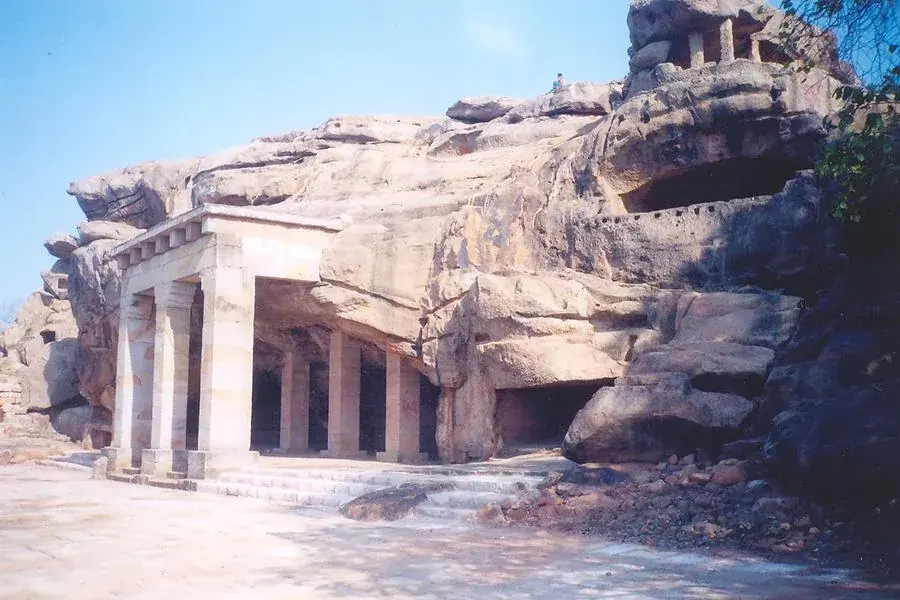
LRBurdak at English Wikipedia, Hathigumpha, Udayagiri Hills, Bhubaneswar, CC BY-SA 3.0. Converted to WebP.
Two kinds of account
Jain dharma has no founder. The tradition holds that it is eternal, that the universe has always existed and always will, and that in every descending and ascending half cycle of time twenty-four Tirthankars appear to teach a path that was never invented and never lost, only forgotten and rediscovered.
Academic history works within a shorter frame and asks a different question: from what point does evidence survive. Its answer places the earliest attested Jain figure in roughly the 8th century BCE. The two accounts are not competing versions of the same claim. One describes what the tradition understands itself to be; the other describes what the surviving record can show. This page keeps them apart and says which is which.
The shraman current
Ancient India carried two religious currents alongside each other. One was Vedic, centred on sacrifice, ritual and a priestly class. The other was shraman, from a word meaning one who strives: wandering ascetics who rejected sacrifice, questioned the authority of the Vedas, and held that liberation comes through personal effort rather than through ritual performed by someone else.
Jain dharma and Buddhism both belong to this current, which is why they share a vocabulary of karma, rebirth and liberation while differing sharply on what those words mean. Jain tradition considers itself the older of the two, and some scholars have argued that the shraman current predates the composition of the Vedas rather than reacting to it.
Parshvanath and Mahavir
Of the twenty-four Tirthankars, the last two are figures historians accept as having lived. Parshvanath, the twenty-third, is placed in the 8th or 7th century BCE. He taught a fourfold restraint: do not harm, do not lie, do not steal, do not possess. Early Buddhist texts refer to his followers as an existing community, which is independent corroboration from outside the tradition.
Mahavir, the twenty-fourth, is traditionally dated 599 to 527 BCE and was a contemporary of the Buddha. Scholars describe him not as a founder but as a reformer of a community that already existed, since he inherited Parshvanath's order about two hundred and fifty years on. His principal change was to add brahmacharya to the four restraints, making the five great vows Jain ascetics keep to this day.
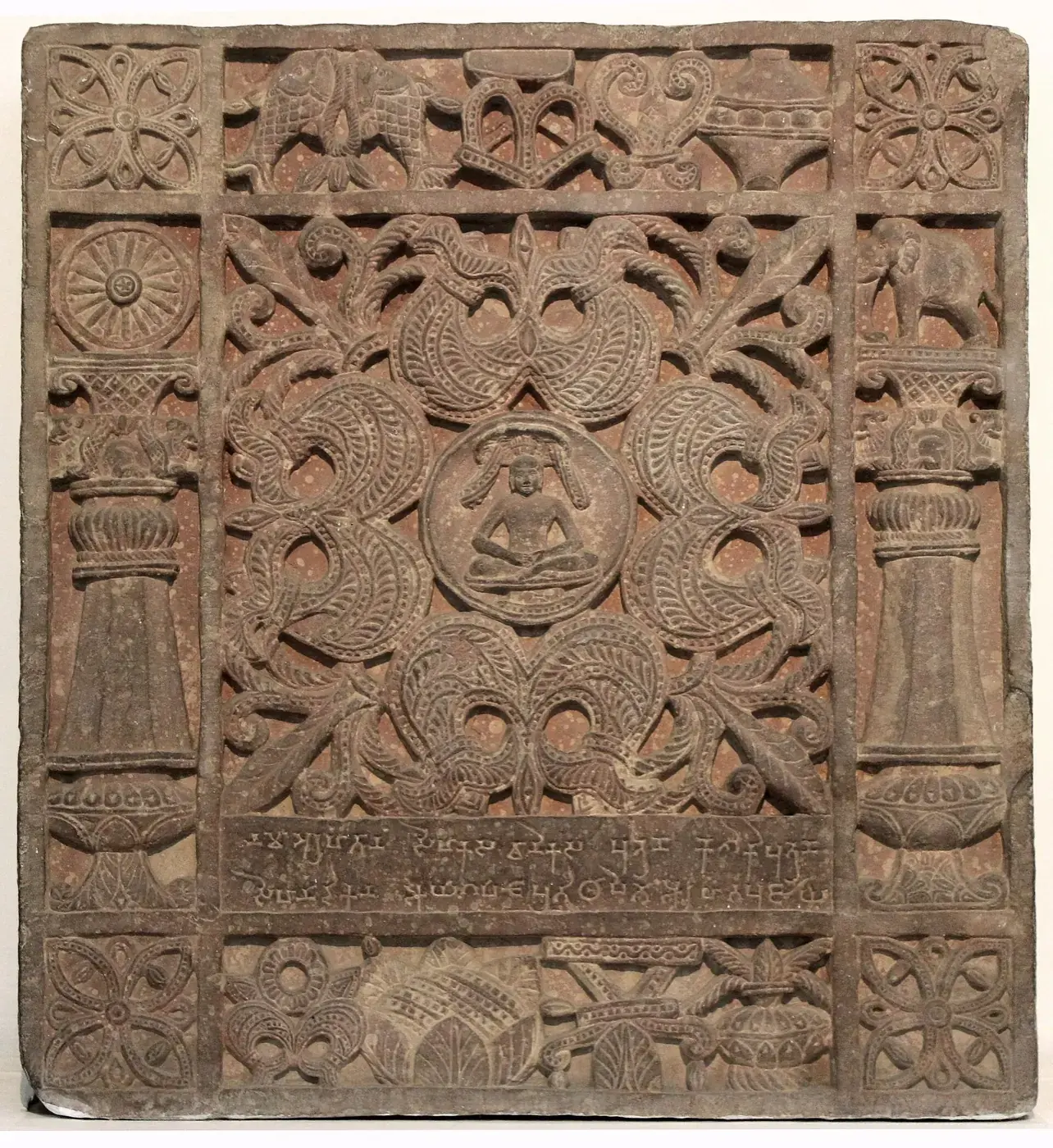
Nomu420, Sihanamdika ayagapata, Jain votive plate, Kankali Tila, Mathura, 25–50 CE, CC BY-SA 3.0. Resized and converted to WebP.
Kings, and the migration south
The order had royal patrons from early on. Bimbisara and Ajatashatru of Magadha, contemporaries of Mahavir, both supported it. In the 3rd century BCE Emperor Ashoka's pillar edicts name the Niganthas, the Jain ascetics, among the communities under his protection, which places the order firmly in the historical record.
Jain tradition records that Chandragupta Maurya, founder of the empire Ashoka inherited, gave up his throne late in life to become a disciple of Acharya Bhadrabahu, and died by voluntary fasting at Shravanabelagola in Karnataka. Bhadrabahu is said to have foreseen a twelve year famine in Magadha and to have led a large body of ascetics south. That migration is the beginning of the Jain presence in the Deccan, which is to say the beginning of the tradition this mandir belongs to.
The texts
Mahavir's teaching was carried orally for centuries. The Digambar tradition holds that the original canon was gradually lost as memory of it faded, and that what survives descends from what could still be recovered.
- Shatkhandagamaषट्खंडागम
- The oldest surviving Digambar scripture, composed around the 2nd century CE by Acharyas Pushpadant and Bhutabali. Its subject is the doctrine of karma in exhaustive detail.
- Tattvarth Sutraतत्त्वार्थ सूत्र
- Acharya Umaswami's summary of the whole doctrine in a few hundred aphorisms, and the one text every Jain tradition accepts as authoritative. If a household owns one Jain book, it is usually this.
- Samayasarसमयसार
- Acharya Kundakunda's work on the soul, and the central text of Digambar spiritual literature. Its companions Pravachanasar and Niyamasar are read alongside it.
In Maharashtra
The Deccan has held Jain communities continuously since that southward migration. The clearest surviving witness is at Ellora, where caves thirty to thirty-four are Jain, cut in the 9th and 10th centuries under Rashtrakuta rule. The Indra Sabha, cave thirty-two, is a two storey temple carved downward out of solid basalt, and it stands about two hundred kilometres from Ambajogai.
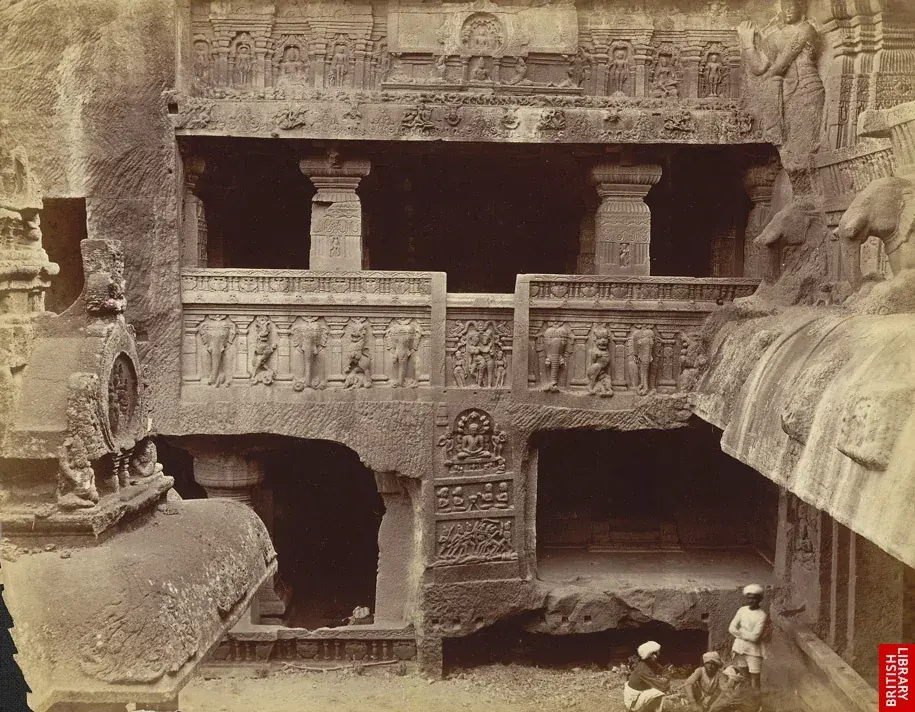
J. Johnston, Left wing of the Indra Sabha Jain Cave Temple, Cave XXXII, Ellora, Public domain. Converted to WebP.
Terms on this page
- Shramanश्रमण
- One who strives. The name of the ancient ascetic movement, independent of the Vedic priesthood, from which both Jain dharma and Buddhism come.
- Parshvanathपार्श्वनाथ
- The twenty-third Tirthankar, dated by historians to the 8th or 7th century BCE and the earliest Jain figure with independent corroboration.
- Niganthaनिर्ग्रंथ
- Without knots, without bonds. The oldest name for the Jain ascetic community, used in Buddhist texts and in Emperor Ashoka's edicts.
- Tattvarth Sutraतत्त्वार्थ सूत्र
- Composed by Acharya Umaswami around the 2nd century CE, and the only text accepted as authoritative by every Jain tradition.
Common questions
Is Jain dharma a branch of Hinduism?
No. It is an independent tradition from the shraman current, which developed alongside the Vedic one rather than out of it. Jain dharma rejects the authority of the Vedas, rejects sacrifice, and has no creator god. Shared festivals and a shared cultural world in India can make the two look closer than the doctrines actually are.
How old is Jain dharma?
The tradition holds it has no beginning. The historical record attests Parshvanath in the 8th or 7th century BCE, making it among the oldest religions still practised. Both answers are given here because they answer different questions, and neither replaces the other.