About the Mandir
An Atishay Kshetra in Ambajogai, dedicated to Bhagwan Vimalnath.
Ambajogai, an ornament to the world
The first poet of Marathi, Shri Mukundraj, called this town Manohar Ambanagari. It has been described since ancient times as Nagaram Bhushanam Bhuvah, an ornament to the whole world, and the description is not merely flattering.
Ambajogai carries inscriptions from the Yadava period and earlier, dated between Shake 1066 and 1150, along with Hemadpanthi construction and older stone sculpture. Jain, Vaishnava and Shaiva cave temples about a thousand years old stand within the town, of the same order as the caves at Ellora that draw visitors from across the world.
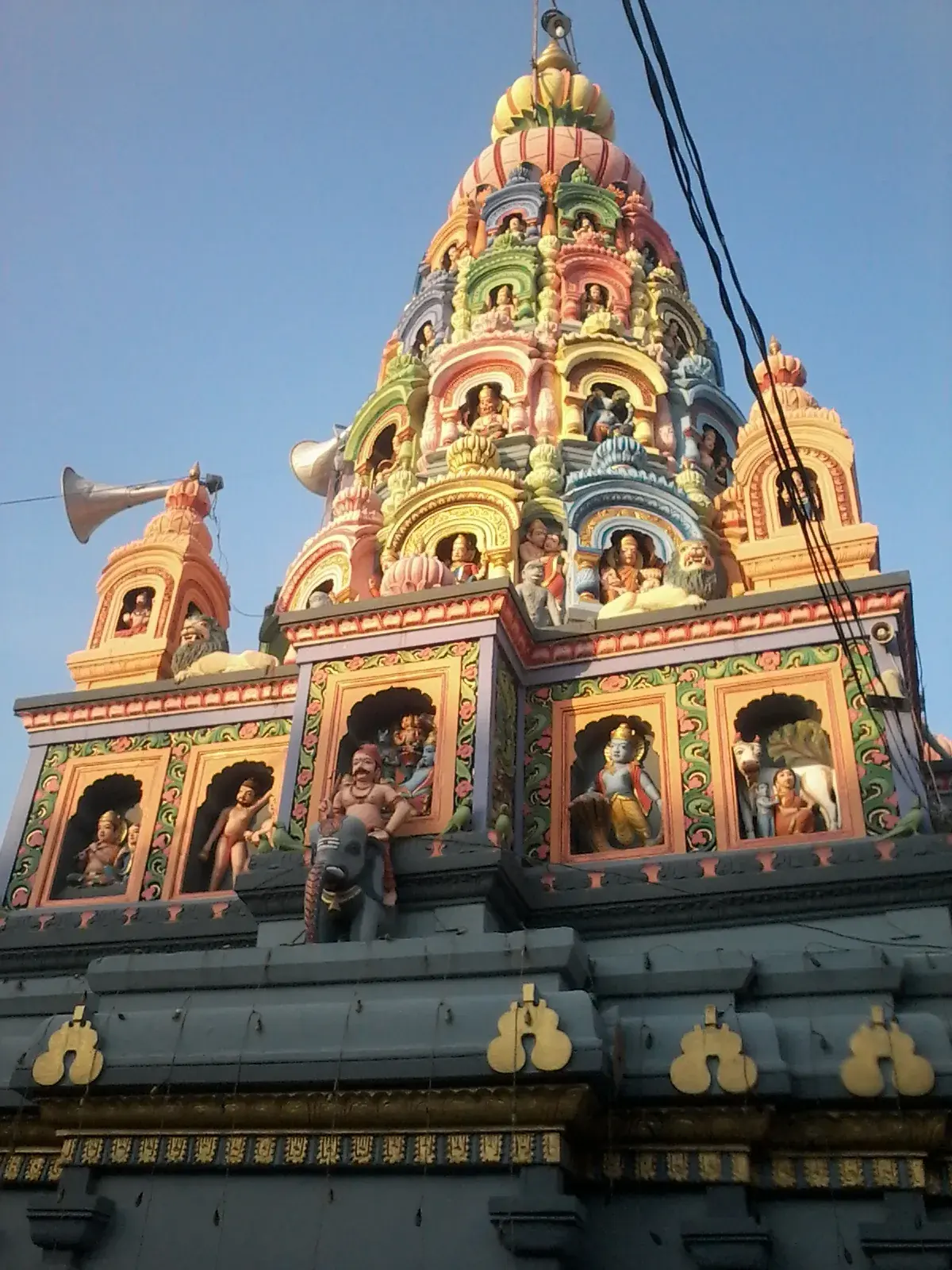
Mahajandeepakv, Ambajogai Yogeshwari Temple, CC BY-SA 3.0. Resized and converted to WebP.
The town was known as a dwelling place of Nath sect siddhas even before Mukundraj. He was born in Shake 1050, 1128 CE, and attained samadhi in Shake 1120, 1198 CE; his Vivek Sindhu holds a place of honour in Marathi literature. The saint poet Dasopant made Ambajogai his karmabhumi and wrote on an extraordinary scale, including six commentaries on the Bhagavad Gita alone, among them the Gitarnav of 125,000 verses and the Padarnav of 125,000 stanzas. His samadhi stands on the road from the Yogeshwari temple to Mukundraj's memorial.
The Vishramdham records that Saint Ramdas drew the inspiration for the Dasbodh from Mukundraj's Vivek Sindhu. Ramdas visited Ambajogai several times, and Dnyaneshwar, Eknath and Chakradhar Swami came here on various occasions. The town has also kept the legacy of Krishnadayarnava, Shivkalyan and Nityanand.
Jayavantinagar, and a Jain king
Kholeshwar, the well known general of Singhana Yadava, kept his principal base in this town. The local ruler, King Jaitrapal, was himself a Jain, and under his reign the Jina shasan held a position of real distinction here. The town was called Jayavantinagar after him.
The Vivek Sindhu itself records why it was written: Mukundraj composed it to impart paramartha, spiritual knowledge, to King Jaitrapal, who is also called Jinpal. The great bastion near the Kholeshwar temple is still called Jaitrapal Raja's Gadhi.
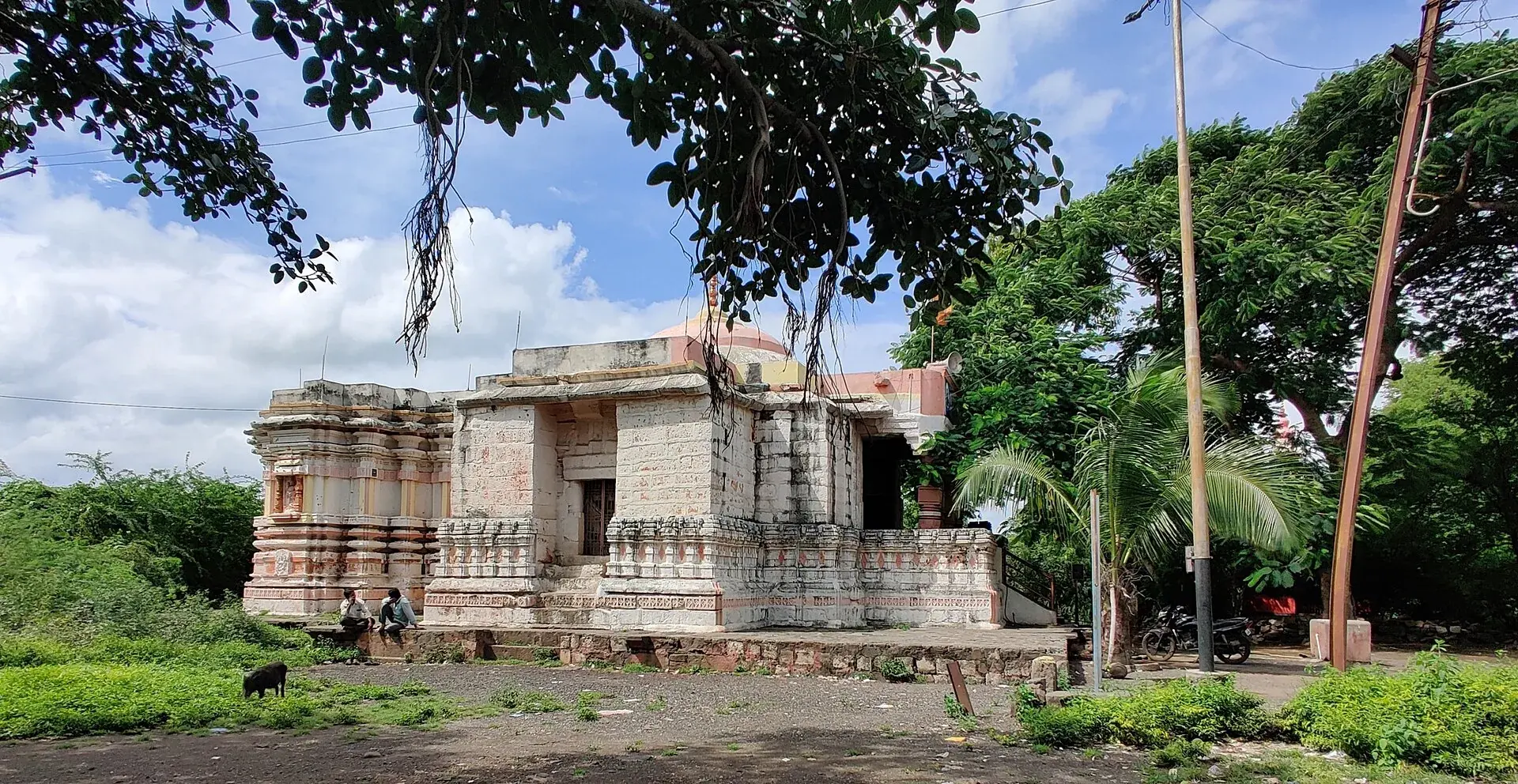
Namdeo S Gundale, Kholeshwar temple, Ambajogai, CC BY-SA 4.0. Resized and converted to WebP.
The town's ancient inscriptions, its Tirthankara images, its temples and the broken Jain sculpture scattered across it together establish how prominent the Jina shasan once was here. Jain carving is still visible on several pillars of the Mallikarjun temple inside the Dasopant samadhi complex. The Sakleshwar temple, known as Barakhambi, is a fine piece of old architecture now in ruins, and Jain sculpture lies scattered across the site; some of it the Jain community has moved to Shri Kshetra Nasaigarh for safekeeping.
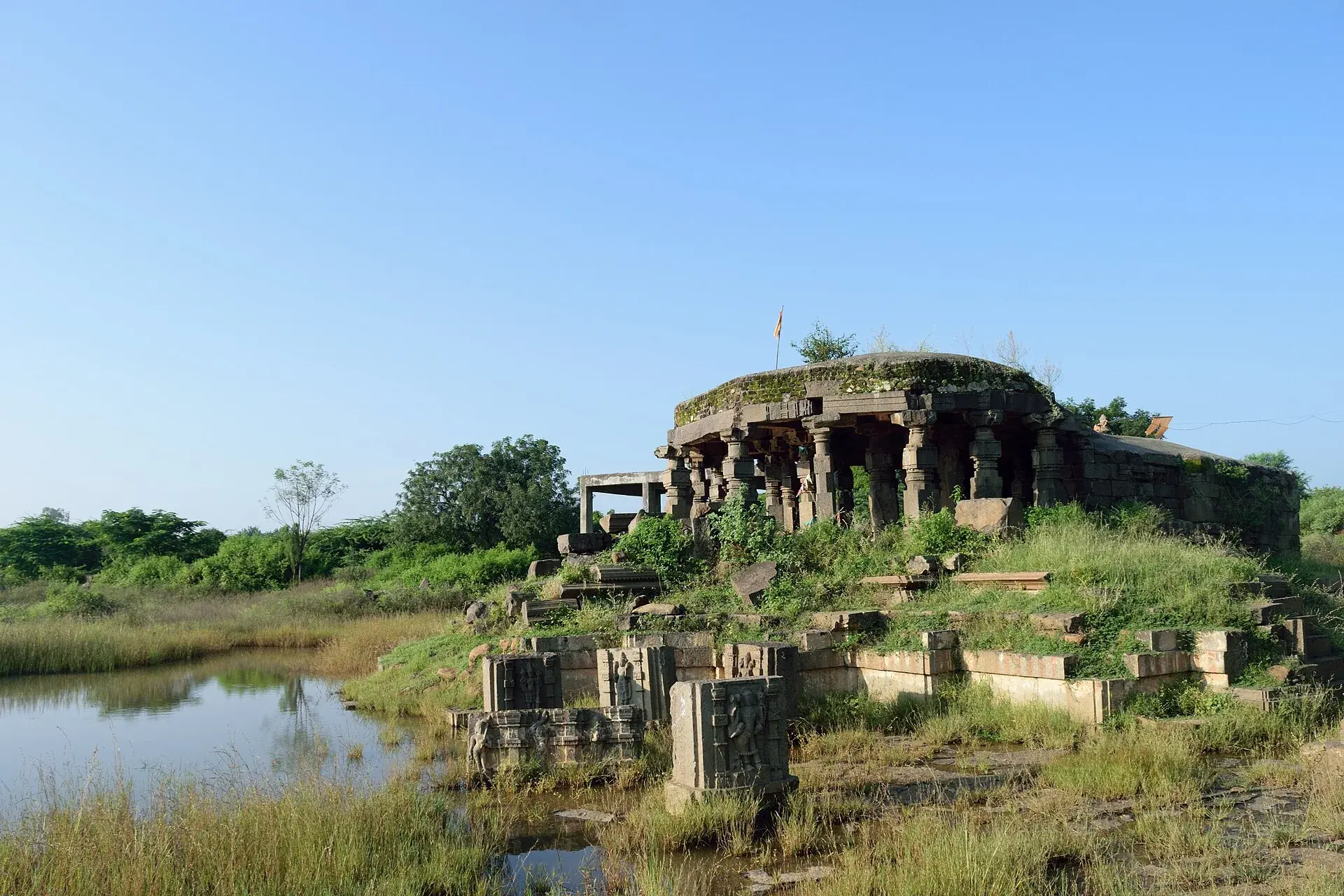
Munnasomani, Barakhambi temple, Ambajogai, CC BY-SA 4.0. Resized and converted to WebP.
The Jain caves on the Jayanti
On flat ground on the near bank of the Jayanti river, beside the Shaiva cave known as Hattikhana, stands a Jain cave cut into the rock. It is the plainest surviving evidence of how established the Jina shasan once was here.
The cave has an east-facing sabhamandap of two rows, with single-row paksha mandaps to the north and south. In the open courtyard before the hall sits the platform of a manastambha. Descending into the courtyard, two giant carved elephants stand facing one another as though ready to receive whoever arrives.
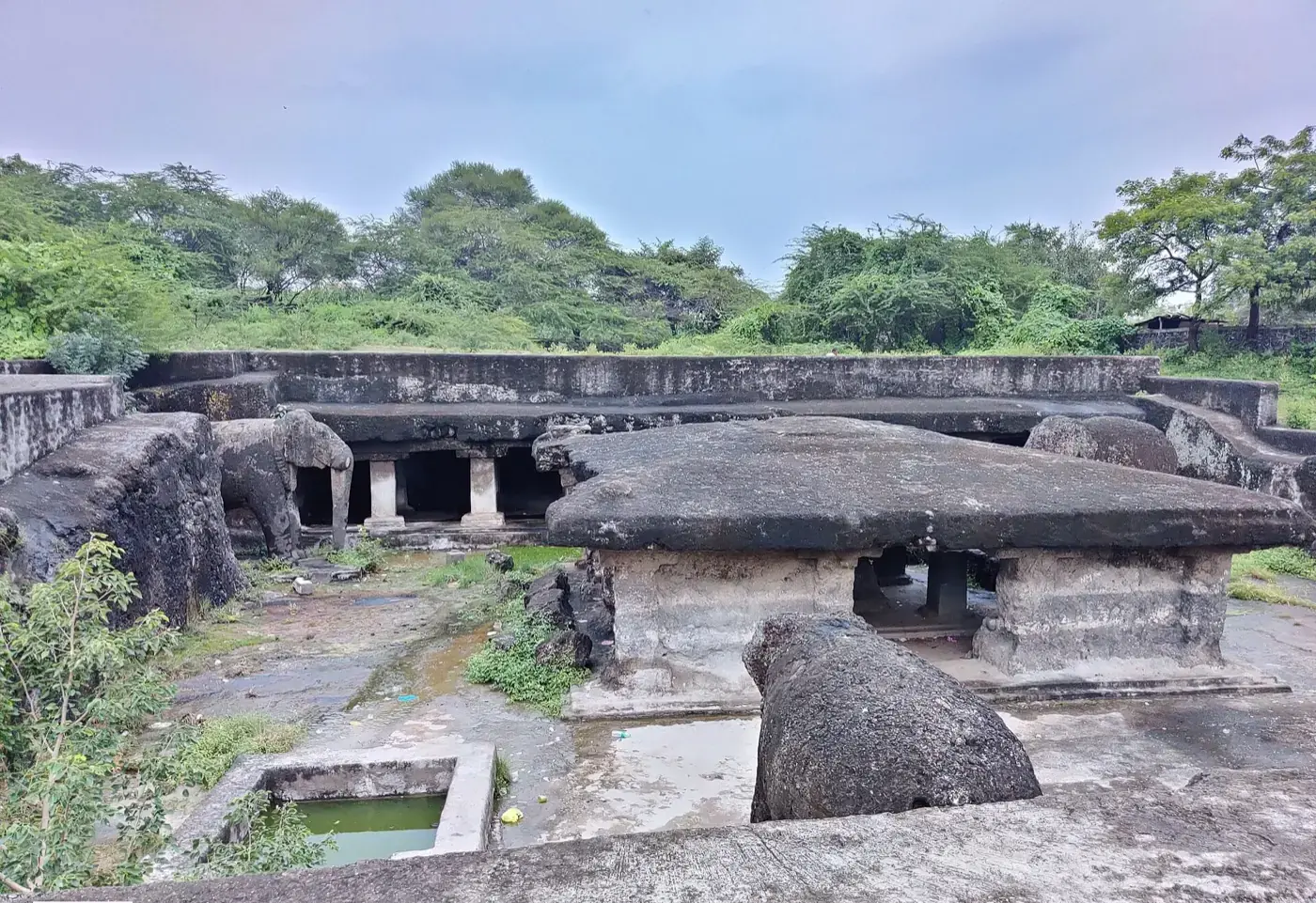
Namdeo S Gundale, Bhucharnath cave temple, Ambajogai, CC BY-SA 4.0. Resized and converted to WebP.
Inside the hall, in a shrine shaped like a temple, stands an image of Bhagwan Mahavir with the simha lanchhan, flanked by yakshinis waving chauris, with dwarpalas at either side of the door. The cave chamber on the left holds Parshvanath with the sarpa lanchhan, again with yakshinis on both sides. The image in the right-hand chamber is too damaged to identify. In the eastern corner cave of the southern paksha mandap is an image of the first Tirthankara, Rishabhanath.
On the wall of the northern paksha mandap, all twenty-four Tirthankaras from Rishabhanath to Mahavir are carved in three rows of eight, and they remain clearly legible. The caves stand severely weathered, bearing what nature and time and people have done to them.
Four names for one town
The town has been called something different in almost every age. Jayavantinagar under King Jaitrapal, roughly nine hundred years ago. Aambdesh and Aamrapur before Shake 1150. Mominabad under the Nizam. Ambajogai today.
A history of this town written today would be incomplete without its Jain past, and that is not a claim the community has to argue for. It is written into the buildings.
The kshetra in Jain Galli
Shri 1008 Vimalnath Digambar Jain Atishay Kshetra stands in Jain Galli, the part of Ambajogai where most of the town's Jain families live. The temple faces west while bearing witness to the spirituality of the east.
It is said to be around a thousand years old. The garbhagriha is of Hemadpanthi construction and holds the Moolnayak, Bhagwan Vimalnath, along with several other Tirthankara murtis. The temple has been substantially rebuilt in recent decades, and the section below records how.
The shikhar carries its own vedi, with further Tirthankara imagery set into it. Adjoining the temple stands a Jain bhawan of two or three rooms and an assembly hall, traditionally kept for visiting Jain munis and aryikas to stay in.
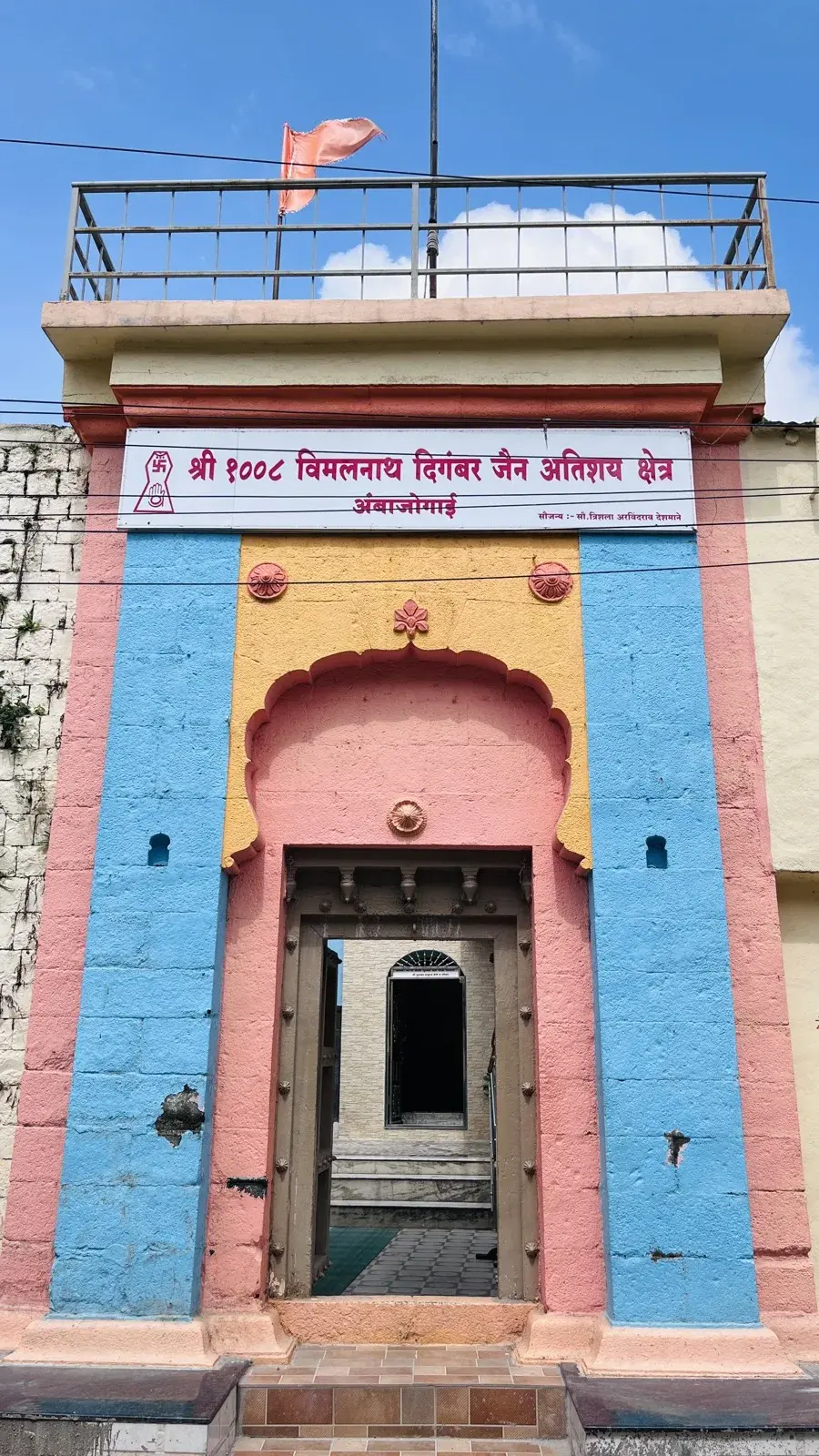
The journey of development
What the kshetra is today was built in stages over about twenty-five years, each stage begun after a muni's visit and paid for by the community itself.
1982-83
The Mahavir Sabhagruha
Pujya Shri 108 Hemsagar Muni came on vihar. At his prompting the tin roof of the old hall was taken off and a new hall built in its place. Religious and cultural programmes are still held in it.
1984
The Deshmane wada, and a blessing
Shri Aabarao Deshmane and his sons gave the wada adjoining the temple at a nominal price, though it was worth far more. Param Pujya Acharya Shri 108 Aaryanandi Muni Maharaj inspected the site and blessed the community's plan for a mangal karyalaya and a student hostel.
Late 1980s
Recognised as an Atishay Kshetra
Shri 108 Chinmaysagarji Maharaj and Shri 108 Akshaysagarji Maharaj, disciples of Acharya Shri 108 Vidyasagarji Maharaj, came to Ambajogai. Members of the sangh recounted the atishay of the Moolnayak before them, and Maharaj affirmed it: this is an Atishay Kshetra, because Shri 1008 Vimalnath Bhagwant resides here possessed of atishay.
31 December 1996
The first annual yatra
The annual fair began, held every year since on Paush Shukla Dashami. The first was guided by Munishri Chinmaysagarji and Munishri Akshaysagarji; later years had the presence of Muni Shri Kulankarnandi Maharaj, Acharya Padmanandi Maharaj with his sangh, and Gunanandi Maharaj with the matajis.
Late 1990s
The mangal karyalaya, and the sanctum widened
Local shravaks and well-wishers from other towns funded the mangal karyalaya to completion. The garbhagriha was then extended eleven feet to the rear, the vedi raised, and granite and marble laid on the vedi and in the inner chamber.
2004-05
The shikhar, and the Ratnatraya panchkalyanak
Whether the roughly five lakh rupees the shikhar needed could be raised was an open question; the committee began anyway and the work was finished. Under the new shikhar, in the presence of P.P. Shri 108 Akshaysagarji Maharaj, the Ratnatraya image was consecrated with a panchkalyanak.
Planned
A dharmashala
Given how many pilgrims now come from outside Ambajogai, a fully equipped dharmashala is intended next.
The Sanmati Seva Dal
Shri 108 Chinmaysagarji Maharaj judged that if the town's young people were pointed in a useful direction, a good deal would follow. Ambajogai went on to host the first Maharashtra state convention of the Sanmati Seva Dal.
- The young men raised 45,000 rupees among themselves and built the kaman on the Ambajogai to Parli road, which is how many pilgrims first learn the kshetra is here.
- At Mahavir Jayanti they organised an Ahimsa Pheri through the town with students from the local schools, which was widely appreciated.
- The kshetra's management and the Seva Dal together founded the Sanmati Nagari Sahakari Patsanstha, now the largest credit society in Ambajogai, with working capital of four to five crore rupees lent to local trades and businesses.
- With the municipal president's help they built the Ahimsa Stambha in front of the municipal building near the bus stand.
Explore the Mandir
Bhagwan Vimalnath
Meet the Moolnayak, Bhagwan Vimalnath, and the story behind the murti.
Shri Kshetra Nasaigarh
A hill kshetra two furlongs away, with an annual palkhi from this mandir.
Trust & Committee
The Vyavasthapan Samiti and the trust's registration details.
Visit Us
Darshan timings, how to reach, and what's here when you arrive.
Gallery
A window into darshan, festivals and daily life at the kshetra.